 FreeFree
Description
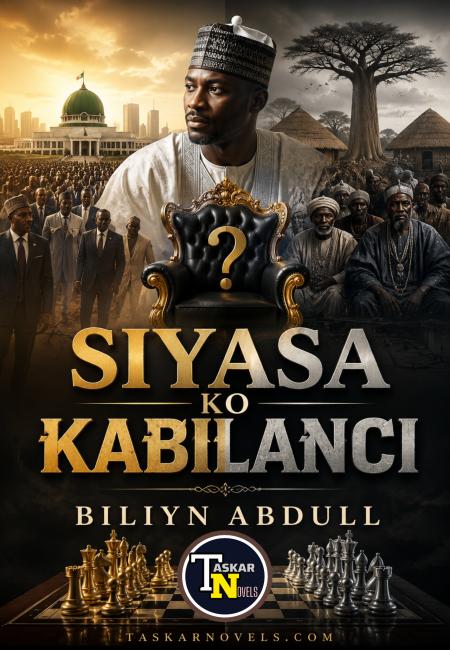
SIYASA KO KABILANCI BOOK COMPELET HAUSA NOVELS
Introduction
In the name of Allah, the Most Gracious, the Most Merciful.
I am deeply overjoyed to connect with you once again in my thirteenth novel. I beseech the Lord of the Supreme Throne to grant me the ability to write that which will benefit the Muslim Ummah, and to guard my tongue against uttering anything that could bring ruin to me or to you. 😭🙏🏻
O Lord, bestow Your mercy and forgiveness upon the final resting place of my beloved father; O Allah, forgive him, have mercy on him, and on all departed Muslim brothers and sisters who have transitioned to the great beyond. 😭🙏🏻 I love you so much, my dear Abiena. 😭
This story is neither a veiled attack nor an insult aimed at anyone. I did not write it to target any specific individual, but solely as a means of enlightenment and a reminder. May Allah grant that I am understood.
Anyone who alters even a single thing within this text, no matter how insignificant, I do not forgive them 🙅♀.
O Allah, protect me from the controversies of social media 🤕.
Chapter 1: The Anatomy of a Nation
NIGERIA is a massive, sprawling, giant nation located within the continent of Africa. It stands as the most populous country and holds the vastest collection of wealth and natural resources in Africa. It is a nation comprised of an immense multitude of ethnic groups, both large and small. According to academic research, scholars have categorized and identified the distinct ethnic groups of Nigeria to number well over 400+.
Furthermore, various religions hold sway with millions of adherents, though Muslims and Christians constitute the overwhelming majority of the country's population. Nigeria is geographically split into two main regions: the North and the South. This geographic framework has facilitated the cross-migration and blending of various ethnic groups, particularly in the border states connecting the Southern and Northern territories. However, three major ethnic groups have successfully consolidated absolute majorities across most of the nation's states.
The Hausa-Fulani Ethnic Group
They possess several major states in the country where you will find this language spoken in its absolute, unadulterated form. No matter how prominent another ethnic group is when it enters these specific states, the local language completely absorbs it. At this juncture, I can confidently state that the Hausa-Fulani language has effectively consumed the vast majority of the smaller minority languages in the North, to the extent that these groups have completely abandoned their native tongues in favor of Hausa.
The Hausa language has not spared the other major ethnic groups either; it has made profound, deep inroads into every single region of Nigeria. Consequently, many have come to view the language as a General Language (lingua franca) due to its absolute dominance over Nigeria and several neighboring foreign countries sharing borders with the nation.
Core Hausa-Fulani States: Kano, Katsina, Sokoto, Gombe. These are states where the true, foundational identity of the Hausa-Fulani resides.
The Igbo Ethnic Group
This is another massive linguistic group that can confidently beat its chest and call itself a major, high-stakes stakeholder in the nation. Even though its total demographic footprint does not equal even half of the Hausa-Fulani population, it remains a tribe with a massive concentration of people. Its primary stronghold is concentrated strictly within the southeastern zone of the country. However, you can find members of this ethnic group in every single nook, cranny, street, and corner of Nigeria due to their unparalleled entrepreneurial spirit and deep penetration into every region for business, extending even into foreign countries.
Core Igbo States: Anambra, Enugu, Abia, Imo, Ebonyi.
The Yoruba Ethnic Group
The Yoruba constitute another massive ethnic block in Nigeria. We can argue that they completely dominate the southwestern region of the country. Furthermore, several smaller minority languages have been absorbed by or utilize this language due to the close cultural and geographical proximity of their tribes to the Yoruba identity. They are a heavily populated group who have successfully established a massive presence across various regions of Nigeria. They hold absolute sway over a major, historically significant, and highly influential territory that has become a historic metropolis—a city the Yorubas themselves take immense pride in, and which Nigeria as a whole boasts of globally: Lagos.
Core Yoruba States: Kwara, Lagos, Ogun, Ondo, Osun, Oyo, Ekiti, Kogi.
A Brief Historical Retrospect
At this point, the reader will likely want to hear a brief excerpt from the history of our country, as this background will allow us to fully understand the underlying message that the narrative of this book, titled "POLITICS OR ETHNICITY!?", is bringing to us. Rather than keeping you guessing, here is a concise breakdown of Nigeria across the centuries, compiled from the historical data of expert scholars. I am providing this because I know most readers do not possess the patience to conduct deep academic research into this field, despite it being vital knowledge that every single citizen ought to know.
Nigeria Across Time
The Portuguese were the very first Europeans to establish commercial trade operations in Nigeria, dropping anchor at the coastal ports they named Lagos and Calabar between the 17th and 19th centuries. During this era, Europeans continuously imported their commercial goods, exchanging them primarily for human slaves—a trade carried out exclusively with local chiefs who managed the ports and profited immensely from the commerce.
In the year 1807, Great Britain officially banned the transatlantic slave trade. Following the subsequent wars of colonial expansion, Britain established a naval squadron in West Africa in an active bid to intercept and stop the human slave trade carried out by other global nations.
Between 1884 and 1885, a monumental diplomatic conference was held in Germany, known historically as the Berlin Conference, where European powers systematically carved up the African continent into various colonial territories and spheres of influence. Following this conference, Great Britain secured a vast portion of West Africa, which included the territory of Nigeria.
Up until this specific period, the governing authority of the British colonialists had not reached Northern Nigeria; their administrative power was concentrated heavily in the Southern protectorate and the colony of Lagos. It was only in 1903 that the British colonial forces successfully conquered Northern Nigeria, following a series of brutal military clashes with the Sultan of Sokoto, Attahiru. The colonial forces arrested and deposed several sovereign monarchs, including the Emir of Kano, Alu, after he refused to capitulate, detaining him in Lokoja. Following this conquest, the British secured total administrative control over both protectorates and Lagos.
In the year 1914, the Governor-General, Sir Frederick Lugard, formally amalgamated the Southern and Northern Protectorates into a single nation. The name "Nigeria" was derived from the Niger River. It originated on January 8, 1897, when a British journalist named Miss Flora Louisa Shaw (who later married Frederick Lugard) wrote an essay for The Times newspaper of England, suggesting that the territory be named Nigeria—meaning **"Niger Area"**—due to the sweeping path the Niger River carved through the country.
Nigeria shares direct borders with the Republic of Benin to the west, Chad and Cameroon to the east, and the Niger Republic to the north. Interestingly, all the nations surrounding Nigeria were colonized by France, with the sole exception of Northern Cameroon, which was administered by Great Britain for a period before France took total control.
From that era onward, Great Britain administered the colonial state via a Legislative Council that initially included only a tiny handful of handpicked Nigerians. As time progressed, certain Nigerians were appointed to lead specific regional administrative zones. While this measure granted increased regional autonomy, it ultimately became the foundational catalyst—the root cause—that birthed the systemic RELIGIOUS AND ETHNIC CONFLICTS across various parts of Nigeria.
When the British colonial authorities realized that the deep-seated friction was refusing to abate, they decided to structurally partition the country, dividing it into three powerful geopolitical regions: the Hausa-Fulani dominated the North, the Yoruba dominated the West, and the Igbo dominated the East. Although this structural division deeply fragmented the citizens along ethnic lines, it gave each major group absolute administrative dominance within its respective region.
The moment these three major ethnic groups secured absolute political control over their populations, the numerous smaller minority ethnic groups across the country immediately began demanding their own independence and self-determination, leading to waves of civil unrest. To restore public stability, a constitutional agreement was reached in 1954 to decentralize power, distributing the responsibility for socio-economic development, healthcare, and education directly to the regional governments. The central federal government retained exclusive control over national security, defense, and the economy.
However, this measure failed to end the systemic friction. Consequently, in 1957, a special administrative body called the Willink Minorities Commission was established to formally investigate and address the deep grievances of the minority ethnic groups during that era.
In the year 1953, Chief Anthony Enahoro moved a historic motion demanding that Nigeria be granted its national independence in 1957. However, the Northern Nigerian delegates strongly rejected the timeline due to a severe shortage of educated professionals and skilled bureaucrats capable of running a modern state administration in the North, alongside an acute fear that the highly educated Southern elite would completely dominate the federal civil service.
During this critical window, waves of Northern youths were sponsored and dispatched to European nations, particularly England, to undergo intensive training and crash courses in administration, accounting, and clerical work to bridge the civil service gap. To maintain national unity amidst these deep structural disparities, the year 1960 was mutually agreed upon as the official date for independence.
After decades of fierce struggle and political activism by patriotic Nigerians fighting to wrench the nation's independence from the British Crown, their ultimate goal was finally realized. On October 1, 1960, Sir Abubakar Tafawa Balewa became the first Prime Minister of an independent Nigeria, formally receiving the colonial scroll and the national flag of independence from the hands of the departing Governor-General, Sir James Wilson Robertson (who ruled Nigeria from 1955 to 1960).
Nigeria's foundational pre-independence elections were held in 1959. Although the Northern-backed party, the NPC (Northern People's Congress), secured the highest number of votes, their total numbers fell short of the absolute majority required to form a government on their own. This mathematical reality forced them into a historic coalition government with the NCNC (National Council of Nigeria and the Cameroons), a party dominated by the Igbo ethnic group.
Following independence in 1960, these two political parties formed the central government. By political arrangement, Sir Ahmadu Bello, the Sardauna of Sokoto, was originally positioned to assume the office of Prime Minister; however, he stepped back to support his deputy, Sir Abubakar Tafawa Balewa, who became the first Prime Minister, while Dr. Nnamdi Azikiwe assumed office as Nigeria's first Governor-General. On the other side of the aisle, the Yoruba-led Action Group (AG), spearheaded by Chief Obafemi Awolowo, formed the official opposition party.
Profound religious, cultural, and ideological disparities existed between the Hausa of the North, the Igbo of the East, and the Yoruba of the Southwest. Bitter political crises continuously rocked the coalition government, leading to deep structural fracturing among the ruling elite. The opposition party, the AG, similarly suffered an internal coup within its ranks, leading to the formation of a breakaway faction in 1962 called the Nigerian National Democratic Party (NNDP), led by S.I. Akintola.
Intense political crises completely overwhelmed the government of this era, resulting in the creation of a fourth region, the Midwestern Region, in 1963, carved out of the old Western Region. On October 1, 1963, a new Republican Constitution was formally adopted, and Nigeria officially became a full member of the Commonwealth. This constitution transitioned Nigeria into a Federal Republic with a President and a Vice President, leading to the election of Dr. Nnamdi Azikiwe as the nation's first President.
In 1963, a national census was conducted, revealing that the Northern Region possessed the absolute demographic majority of the country's population. The explosive results of this census ignited a fierce political firestorm between the regions; the NCNC vehemently rejected the figures, arguing that the census had been systematically manipulated simply to grant the North an untouchable majority of seats in the national parliament.
As these political crises spiraled completely out of control without a political solution in sight, the military intervened, executing Nigeria's very first military coup d'état on January 15, 1966.- Dr. Nnamdi Azikiwe: First President of Nigeria (1963–1966).
- Sir Abubakar Tafawa Balewa: First Prime Minister of Nigeria (1912–1966).
- Major General Johnson Thomas Umunnakwe Aguiyi-Ironsi: First military Head of State of Nigeria; Ironsi spent exactly 194 days on the throne of power.
- General Yakubu Gowon.
- General Murtala Ramat Muhammad.
- Olusegun Obasanjo: Ruled the nation as a military Head of State from February 13, 1976, to October 1, 1979. He returned as a democratically elected civilian President from May 29, 1999, to May 29, 2007.
- Alhaji Shehu Usman Aliyu Shagari (Turakin Sokoto): First executive, fully empowered civilian President of Nigeria.
- General Muhammadu Buhari: Ruled Nigeria from December 31, 1983, to August 27, 1985.
- General Ibrahim Badamasi Babangida (IBB): Ruled Nigeria from August 27, 1985, to August 27, 1993.
- Chief Ernest Shonekan.
- General Sani Abacha: Ruled Nigeria as military Head of State from 1993 to 1998.
- General Abdulsalami Abubakar: Ruled the country from June 9, 1998, to May 5, 1999.
- Alhaji Umaru Musa 'Yar'Adua: Ruled the nation as civilian President from May 29, 2007, to May 5, 2010.
- Goodluck Ebele Azikiwe Jonathan: 2010–2015.
Muhammadu Buhari: Returned to power as a democratically elected civilian President.
Transition to the Narrative
Alhamdulillah, this is a brief, summarized history of our inherited homeland. Anyone seeking more comprehensive data can conduct rigorous historical research among academic experts; this is simply the historical data Allah enabled me to gather from the archives of scholars. 😅
Our story now begins directly.
Plateau State (Jos)
This is a state located within the northern region of the country, but it is unique due to its dense concentration of diverse indigenous ethnic groups, housing millions of adherents of both the Christian and Muslim faiths. This diverse demographic framework has made the state an active hotbed for intense ethnic bigotry, tribal discrimination, and civil unrest. The vast majority of these violent crises are triggered directly by POLITICS OR ETHNICITY! Yet, within a short space of time, these clashes seamlessly transform into full-blown RELIGIOUS WARFARE. This vulnerability is precisely why the communities of this region are constantly exploited by external actors to spark violent conflicts.
Jos houses several major indigenous ethnic groups, including: the Afizere, Afo, Alago, Anaguta, Amo, Ankwel, and Bashiri (Bashirawa). Additionally, a massive, highly established population of the Hausa-Fulani ethnic group resides within the state.
Khadija Isma'il Uba (Amatallah):
She hails from this Hausa-Fulani ethnic block. Her ancestors initially migrated to Jos for trade, a migration that ultimately forced their descendants to adopt Plateau State as their permanent, biological state of origin—a homeland they can confidently claim as the land of their ancestral grandfathers... ✍🏻😅👍🏻
May Allah grant forgiveness to our parents 🤲🏻😭
[1/16, 1:05 PM] Aysha Galadima: Typing ✍🏻
HASKE WRITERS ASSOCIATION 💡
POLITICS OR ETHNICITY!?
(A Warning to the Youth)
By Bilyn Abdull 🤙_*
Chapter 3: Traumatized Innocence
"Amatallah, what on earth is consuming your thoughts like this? You've been sitting in front of your food for ages, just making a complete mess of it without swallowing a single bite."
Lifting her large, expressive eyes, Amatallah looked at her mother (Ammi). She quickly averted her gaze as hot tears pooled in her eyes, her voice trembling as she whispered, "By Allah, Ammi, I am completely full."
"Amatallah, I swear by Allah I will not tolerate this absolute nonsense! What exactly did you eat to make you full? You didn't even eat a proper lunch earlier; you barely swallowed four small bites before leaving the plate for me, claiming you were in an absolute rush to reach the Islamic school. And now you're turning around to tell me you're full...?"
"What exactly is going on here?" Amatallah's father asked, walking out of his private bedroom into the living room.
Both Amatallah and Ammi turned to look at him. Ammi sighed, "It's the exact same issue you already know about—her refusal to eat her food."
Letting out a short chuckle, he walked deeper into the living room to where Amatallah was sitting on a sofa, leaning against the cushions. He sat down right beside her. "Come now, my one and only daughter. Eat your food, my dear. It is highly unhealthy to go to bed on an empty stomach. Is this how you plan to go on your upcoming holiday to Kano to visit your uncle's house?"
"Baba, I will definitely go, but I swear by Allah I am completely full," she choked out, wiping away a tear she had been desperately trying to suppress.
"Subhanallah, my daughter, are you crying now? Look, stand up and take that food back to the kitchen. Come back out, and I'll give you some fresh fura (millet dough milk) that I bought specially for you on my way home from work."
A warm smile finally broke across her face as she wiped away her tears. She stood up quickly and headed toward the kitchen, carrying her food plate. Her father followed her with his gaze, a soft smile playing on his lips.
Ammi clicked her tongue in annoyance. "I swear by Allah, you are the sole catalyst encouraging this girl's stubborn, spoiled behavior! I am simply trying to prepare her for the harsh realities of life—especially since she is about to stay in another person's household." Ammi made this statement visibly irritated before turning on her heel and retreating into her bedroom.
Her husband simply watched her go, shaking his head silently. He knew his wife was speaking the objective truth; however, he felt he had no choice but to deeply cherish and pamper his only daughter. Amatallah was an absolute miracle child; following her birth, his wife had faced secondary infertility. It had been nearly 19 years since Amatallah's birth, and his wife had never managed to conceive again, not even suffering a miscarriage. He let out a deep sigh as he felt Amatallah return and sit back down close to his side.
She smiled gently. "Baba, I've brought the fura. Thank you so much. May Allah expand your financial blessings."
"Amin, my beautiful daughter. May Allah bestow His ultimate blessings upon you, do you hear me?"
"Amin, Baba."
She launched into a comfortable chat with her father, an evening routine they shared daily. However, tonight's conversation was radically different from their usual lighthearted topics. Tonight, Amatallah began recounting the terrifying security incident that had unfolded earlier that afternoon. As she spoke, the sheer tremor in her voice was enough to confirm to anyone that she remained profoundly traumatized and terrified.
Ammi eventually emerged from her room and joined them, sitting down to listen. They remained locked in deep conversation until nearly 10:30 PM before they finally closed the session, with each family member heading to their respective rooms to prepare for sleep.
The Mid-Night Terror
A completely new wave of psychological distress hit Amatallah; she found it absolutely impossible to sleep. The terrifying events of that afternoon began playing back in her mind with vivid, hyper-realistic precision. In her mind's eye, she kept seeing the violent thugs (Su Zike — Zike's gang) standing directly over her head brandishing raw knives. Panic-stricken, she flipped on her bedroom light and frantically searched every corner of her room. Finding nothing, she tried to calm down, yet sleep eluded her entirely until deep into the night when absolute exhaustion finally pulled her under.
Suddenly, she jolted awake in the dead of night, letting out a bloodcurdling, panicked shriek. She had just suffered a horrific nightmare where Zike and his gang had successfully tracked her down to her family home, storming her room to assassinate her.
Her terrifying scream violently woke her parents from their sleep. Panicked, they rushed into her bedroom. The moment Amatallah laid eyes on them, she threw herself into her mother's arms, weeping hysterically while her entire body convulsed with violent tremors.
What had initially seemed like a minor scare rapidly escalated into a full-blown medical crisis. Amatallah was completely unable to return to sleep, keeping her panicked parents awake for the rest of the night. Initially, they thought it was a simple emotional reaction, but the situation quickly turned terrifying when Amatallah lost consciousness, slipping into a deep faint. By the time the dawn call to prayer (Asuba) rang out, a raging, burning fever had completely seized her body, and she could barely articulate a single coherent word.
Storyline B: The Traditional Elite Household
In a fast, coordinated effort, she helped him dress, picking out a premium, short-sleeved brown Jallabiya. He sprayed a dash of his high-end perfume before they walked down together to the ground-floor living room. His children were sitting together, completely engrossed in a children's program broadcasting on an Arabic satellite channel. They were so intensely focused on the television screen that they didn't even notice their father (Abbu) step into the living room. He simply stood there for a moment, looking down at them with a soft, proud smile.
His first wife set down a small ceramic bowl filled with premium dates right in front of him, alongside a crystal glass jug filled with chilled water. He glanced at the dates before looking up at her. "No, thank you. I already ate some dates while in the car. Just pour me the water instead."
She poured the water into a small cup and handed it to him. He accepted it gratefully, saying, "Jazakallahu khairan, my beautiful wife."
"Amin, my light (Nurrina)."
Only after draining the cup entirely did he set it down, uttering a soft, "Alhamdulillah."
She smiled. "Now for your actual dinner."
"Alright, go ahead and set it up. Let me quickly step away to check on Saifuddeen's health." Without waiting for her reply, he turned and headed directly toward the private wing of his second/younger wife (Amarya).
His younger wife, Aneesa, was sitting in her private living room, breastfeeding their infant daughter, Siddiqa. Right beside her on the sofa, a young boy was crying hysterically, clutching a small cup in his tiny hands. From the scene, it was obvious she was forcing him to drink the contents of the cup against his will.
The moment he called out the Islamic greeting (Salam) as he entered, the boy's cries instantly redoubled in intensity. Aneesa looked up, returning his greeting.
He stepped quickly across the room and sat down right next to the crying boy. "Saifuddeen, what on earth is going on here to warrant this intense crying? What exactly did you do to him?"
She replied in a soft, weary tone, "What could I possibly have done to him, my dear? I simply insisted that he drink his tea so I could administer his medication, and he threw this absolute tantrum. You know how Saifuddeen gets."
Taking the tea cup from the boy's hands, he placed it onto the coffee table in front of them. He pulled the young boy tightly against his chest, placing his hand against the child's forehead and neck. The boy's skin was radiating a burning, scorching fever.
He whipped his head around to glare at Aneesa, his voice laced with sudden rage. "Aneesa, are you telling me you waited until this exact moment to try and give him his medicine? You left my son suffering with this burning fever coursing through his body all this time without medical intervention?"
"No, I swear by Allah, my dear! I gave him his medication hours ago," she pleaded defensively. "But you know how fiercely he rejects medicine. The moment I forced it down his throat, he suffered a violent bout of vomiting and threw everything up. Afterward, he fell into a deep sleep. Their senior mother (Ummansu — the first wife) explicitly advised me to let him rest until he woke up naturally, and he literally just opened his eyes a moment ago. Please, for Allah's sake, forgive me."
He offered no verbal response to her explanation. Instead, he began stripping the boy out of his shirt and trousers. Aneesa simply watched them in silence as he gathered the child into his arms and carried him into her bedroom. Hearing the sound of rushing water from the en-suite bathroom, she realized he was giving the boy a cold bath to break the fever.
She turned her attention back to infant Siddiqa, unlatching her from her breast since the baby had fallen into a deep sleep. She walked into the bedroom just as he emerged from the bathroom, holding young Saif wrapped in a large towel.
He sat down on the edge of the bed, keeping a deliberate physical distance from her. "Hand me some thick, heavy winter clothes for him."
She moved instantly, pulling out warm winter wear and handing them over. He dressed the boy with his own hands, hoisted him up into his arms, and walked out of her wing without uttering another word to her. She simply watched his retreating back. She knew his character well—he was capable of much harsher treatment whenever it concerned the absolute well-being of his children.
In the main family living room, he found his senior wife (Umma) had already laid out his dinner on the carpet. He sat down, placing young Saif securely by his side before turning his gaze toward his older sons, Sahib and Abul-Khair. "Come over here and join me for dinner, boys."
In unison, they replied, "Right away, Abbu."
Umma reached out to touch Saifuddeen's neck, evaluating his temperature. "Deen, how does your body feel now? Has the fever finally begun to drop?"
The young boy nodded weakly. "Umma, I want some water."
"Right away, my sweet Deen." She poured water into a cup and held it to Saifuddeen's lips. He drank nearly half of it before Abbu intervened, "That's enough water for now. I don't want him bloating his stomach with liquid before he eats."
Without a word of objection, she smoothly withdrew the cup from the boy's lips. She sat before her husband, dishing out his portion before serving identical plates to the boys.
He began his meal by eating a fresh fruit salad, his sharp gaze locked onto his children as they ate their food with absolute decorum and silence. Not a single child dared to whisper, for he had established an ironclad household rule: Any child caught talking or making noise while eating would face a severe physical beating. It was because of this strict discipline that even their youngest daughter, Ummita, maintained absolute silence during family meals.
Shifting his gaze to Umma, who was sitting to the side flipping through satellite channels on the television, he asked, "Aren't you going to join us for dinner?"
She offered him a warm smile. "Of course, we will eat shortly."
He nodded, turning his focus back to the bowl of fruit salad in front of him.
II. Original Document Summary
This text comprises Chapters 1 and 3 of the novel "Siyasa ko Kabilanci?!" (Politics or Ethnicity?!), authored by Bilyn Abdull. The narrative operates on two distinct levels: a structural socio-political commentary on the Nigerian state, followed by a transition into separate domestic storylines based in Northern Nigeria.
1. The Socio-Political Framework (Chapter 1)
- The Ethnic Triad: The author provides a detailed geopolitical and historical breakdown of Nigeria's three major ethnic blocks: the Hausa-Fulani (dominant in the North), the Igbo (dominant in the Southeast with commercial penetration nationwide), and the Yoruba (dominant in the Southwest with Lagos as their economic crown jewel).
- Historical Retrospect: The text tracks Nigeria's historical milestones, including 19th-century Portuguese trade, the British anti-slavery naval blockades, the 1884 Berlin Conference, the 1914 Amalgamation by Sir Frederick Lugard, the coining of the name "Nigeria" by Flora Shaw, the 1957 Willink Minorities Commission, and the political maneuvering that led to Independence on October 1, 1960, under Prime Minister Sir Abubakar Tafawa Balewa and President Dr. Nnamdi Azikiwe.
The Root of Discord: The author argues that British regional partitioning directly catalyzed modern ethnic and religious crises, weaponized by the political class for power.
2. Storyline A: The Trauma of Amatallah (Jos, Plateau State)
- Setting the Stage: The story moves to Jos, Plateau State—a region noted for its intense multi-ethnic fabric and vulnerability to political violence that frequently transforms into religious warfare.
- The Protagonist: Introduce Amatallah (Khadija Isma'il Uba), a 19-year-old miracle child born to a Hausa-Fulani family after decades of secondary infertility.
The Medical Crisis: Following a violent encounter with a local political thug gang led by a figure named Zike, Amatallah is left profoundly traumatized. She suffers a severe midnight panic attack, hallucinates assassins, faints, and develops a life-threatening fever.
3. Storyline B: The Polygamous Aristocratic Elite
- The Patriarch ("Abbu"): The narrative introduces a highly disciplined, wealthy, and deeply authoritative patriarch who operates an affluent polygamous household.
- Household Dynamics: The text highlights the subtle friction and structural organization between the Senior Wife (Umma—nurturing, compliant, highly respected) and the Junior Wife (Aneesa—younger, defensive, struggling under the weight of childcare).
The Conflict: Abbu flies into a rage at Aneesa for failing to manage their son Saifuddeen's burning fever, demonstrating his intense, uncompromising devotion to his children's welfare and his strict household rules (such as a total ban on talking during meals under penalty of corporal punishment).
III. Literary Analytics & Themes
1. Ethno-Political Weaponization
The title "Siyasa ko Kabilanci?!" acts as the central thematic engine. The author uses Chapter 1 to establish that tribalism in Nigeria is an artificial construct, historically exacerbated by colonial partitioning and continuously exploited by modern political actors. In Chapter 3, this macro-political theme hits the ground when Amatallah is hunted by Zike's gang, showing how elite political thuggery directly traumatizes innocent citizens.
2. The African Polygamous Hierarchy
The second storyline provides a highly realistic look into traditional, upper-class northern Nigerian polygamy.
- The First Wife (Umma) holds structural authority; she collaborates with the husband, gives administrative advice to the co-wife, and serves the meals.
The Second Wife (Aneesa) occupies a more vulnerable space, facing direct marital reprimand when domestic or health mishaps occur.
3. The Cult of the Patriarch
"Abbu" represents the absolute, unyielding African patriarchal figure. He is deeply loving and protective of his children (bathing his sick son himself), yet incredibly stern and feared (demanding absolute silence at the table under the threat of physical discipline).
IV. Section Description
```
[CHAPTER 1: THE MACRO-CONTEXT]
│
├──► HISTORICAL ANATOMY: Geopolitical analysis of Nigeria (Hausa-Fulani, Igbo, Yoruba);
│ Colonial Amalgamation (1914) to Independence (1960).
│
└──► THE VOLATILITY OF JOS: Transition to Plateau State as a flashpoint where
political maneuvering easily triggers ethnic and religious violence.
│
[CHAPTER 3: THE MICRO-NARRATIVES]
│
├──► STORYLINE A (AMATALLAH): 19-year-old only child in Jos breaks down from PTSD
│ following a violent encounter with Zike's political street thugs.
│
└──► STORYLINE B (THE ARISTOCRAT): Affluent polygamous home; Abbu's intense discipline,
clash with his junior wife over a sick child, and the ironclad rules of his estate.
- Name book SIYASA ko kabilanci AuthorBILIYN ABDULL Date07-06-2026' Published Taskar Novels Photo Taskar