
 FreeFree
Description
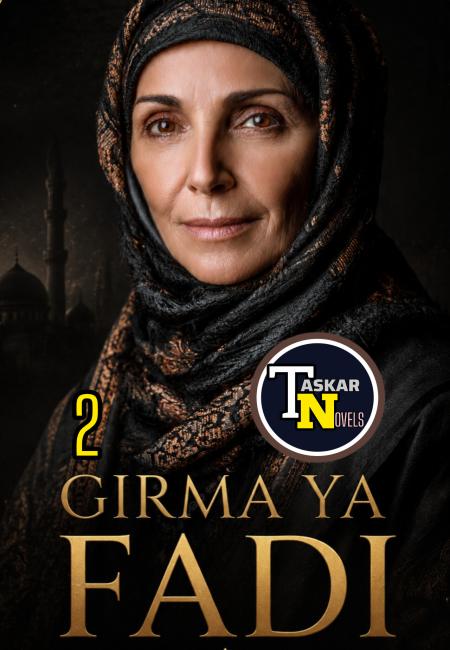
Girma Ya Fadi 1" (The Fall of Honor, Part 1) set in 1988 Gwarzo, Kano.
Part 1: High-Quality English Translation
THE HEALER'S CITADEL
My name, the identity I have known since my earliest childhood, is Zaynab Aliyu Gwarzo. My father, a revered and deeply rooted son of the soil from the historic town of Gwarzo within Kano State, was known to all as Malam Ali Mai Almajirai. Throughout the length and breadth of Gwarzo and its surrounding territories, Malam Ali was a legendary figure, widely celebrated for his extraordinary mastery in treating psychological and physical afflictions rooted in demonic possessions, utilizing nothing but the therapeutic verses of the Holy Qur'an.
Beyond his spiritual healing practice, he served as the spiritual guardian and educator to thousands of Islamic boarding scholars (Almajirai). He was also a highly successful master farmer and pastoralist. He possessed five massive, high-yield agricultural estates and maintained sprawling, dense livestock pens filled to the brim with domestic livestock and exotic birds—including standard farm chickens, ducks, turkeys, ostriches, gazelles, guinea fowls, goats, and sheep.
Furthermore, Malam Ali was a man of impeccable moral integrity and unbridled, radical generosity; every single soul who had ever lived or spent a night in Gwarzo was deeply familiar with this truth. Throughout the entire town, he enjoyed an unparalleled status of respect, honor, and supreme dignity. No matter where you found yourself in Gwarzo, if you simply announced that you were searching for Malam Ali's compound, the citizens would immediately reply, "You mean the Guardian of the Scholars?" From any corner of the town, people would willingly escort you directly to the grand stone porch of Malam Ali Mai Almajirai.
Malam Ali had three wives bound to him in holy matrimony, yet among them, none had been blessed by God with surviving offspring except his first wife, Inna Dubu, who gave birth to Umar-Faruk—the lone surviving son. Before Faruk's successful birth, she had endured nine consecutive pregnancies, all resulting in infant mortality (wabi), with the children dying shortly after birth.
After Inna Dubu came Inna Rakiya, followed by my own mother, Rabi. Rabi, Malam Ali's youngest and final wife, was a fair-skinned, pure-blooded Tuareg woman (Buzuwa). She was my biological mother, and it was directly within her protective custody that I was raised.
The foundational origin of my mother’s marriage to Malam Ali was born out of a desperate search for medical intervention. Because Malam Ali was a highly connected spiritual authority who regularly interacted with diverse clienteles from every corner of the Hausaland and its surrounding West African borders, prominent merchants, top-tier politicians, highly educated elites, and senior civil servants frequently flooded his compound seeking absolute breakthrough in their respective fields. Witnessing tangible, miraculous success through his spiritual counseling, people from vast distances brought their sick and afflicted to him. Consequently, Malam Ali had designated an entire separate wing of his massive estate exclusively to house these long-term patients.
He provided spiritual formulations for commercial success, treated complex biological illnesses, and specialized in severe occult disorders, particularly those involving demonic interventions, down to standard daily ailments. Because of this massive reputation, the open courtyard of our family home was perpetually choked with sleek, modern luxury vehicles—one high-end car driving in while another drove out.
It was this very spiritual reputation that brought him into contact with Alhaji Sani Buzu, a phenomenally wealthy international leather tycoon and high-stakes politician hailing from the city of Niamey in the Republic of Niger. He had traveled all the way to Kano State specifically to secure a spiritual cure for his eldest daughter, Rabi, who had been struck down by a severe mental breakdown caused by demonic possession. She traveled alongside her younger sister, Nuratu.
While in Kano city, he discovered the legendary reputation of Malam Ali through a mutual friend—a wealthy Nigerien cross-border merchant who had frequently received spiritual interventions from Malam Ali. Alhaji Sani was a complete stranger to Kano; in truth, he had never once set foot in the territory until Rabi's medical emergency forced his hand. A profound, intense bond of paternal love existed between him and his two daughters, Rabi and Nuratu, whose biological mother had passed away years prior. Since his wife's demise, he had refused to marry another woman, dedicating his entire existence to his daughters.
He brought Rabi to Kano with the singular, absolute goal of curing her affliction. Now, Malam Ali did not claim to cure advanced clinical insanity, but if the affliction was a fresh, spiritual infestation caused by jinn, it could never defeat his mastery; he possessed the capability to permanently sever a human being from demonic control within a few short weeks using the pure verses of the Holy Qur'an.
He placed Rabi and her younger sister Nuratu in Malam Ali's compound for a two-week (2\text{ weeks}) intensive spiritual therapy. Fortunately, her affliction was relatively minor, and within a very short window of time, Malam Ali had completely delivered her from the demonic entities.
Overwhelmed with pure, unadulterated joy, Alhaji Sani enthusiastically declared that Malam Ali could demand absolutely anything he desired on earth, and as long as it was within his massive financial power, he would grant it instantly. Malam Ali opened his mouth and casually replied, "Even if you give me nothing else, why not simply grant me Rabi’s hand in holy matrimony? That would be infinitely more valuable to me than any material reward you could offer. I never accept commercial fees for my spiritual work; I only accept voluntary charity where it is genuinely needed."
Hearing this request, Alhaji Sani froze, a cold dread washing over his spirit. He had never in his wildest dreams imagined that this was the specific bounty Malam Ali would demand, and he deeply regretted opening his mouth to offer such an open-ended promise.
His mind was instantly thrown into a state of severe panic. These were young girls who had never set foot outside Niger, who did not even understand the single Hausa word for "come" (zo). Furthermore, Rabi was completely incapable of functioning without her younger sister; an absolute, inseparable spiritual attachment and bond existed between Rabi and Nuratu.
Back in Niamey, they lived comfortably alongside his aging mother, and he was fully planning to remarry within that very year before the upcoming regional elections he was contesting in their home state of Zinder (Damagaram).
He deeply respected Malam Ali's impeccable lifestyle and the dignified character of his family. He did not look down on their rural setting at all; the household was draped in high-quality clothing, sustained by premium food, and blessed with absolute financial security. Yet, his heart bled for Rabi—he wondered if she would ever consent to this arrangement, and he agonized over how he could possibly tear Nuratu away and return to Niger alone without Rabi.
To the absolute bewilderment of everyone involved, the moment Rabi was consulted regarding the proposal, she accepted without a single moment of hesitation. This was a monumental, shocking revelation, primarily because Malam Ali was old enough to be Rabi’s biological grandfather.
As for young Nuratu, she flatly declared that wherever her elder sister’s feet trod, her own feet would follow—meaning she absolutely refused to return with her father to Niger. Seizing the moment, Malam Ali solemnly vowed to raise, feed, and protect Nuratu exactly like his own son Faruk until the day she was fully grown and ready for her own holy marriage.
Alhaji Sani refused to depart until he had formally calculated Rabi's marriage dowry and paid it in full to Malam Ali. Allahu Akbar! God is Greatest! Little did anyone know, this marked the absolute end of his mortal life. This sudden arrangement was his permanent, final farewell to his beloved daughters, Rabi and Nuratu.
On his high-speed journey back to the Niger Republic—his mind heavily burdened and spinning with anxiety over how he would possibly explain to his aging mother and extended family that he had married off Rabi without their knowledge, consent, or presence, leaving her in a foreign country with a completely different ethnic group—a catastrophic event struck. Before his transport could reach the capital city of Niamey, their aircraft crashed violently into a jagged mountain peak. Not a single living soul survived the wreckage.
THE GILDED CHILDHOOD & THE BROTHER'S SHADOW
As for me, I grew up completely devoid of any concrete information regarding the whereabouts or fate of Aunt Nuratu. Our family compound was perpetually bustling with a small army of foster children. Every single one of Malam Ali’s wives personally fostered and raised the children of their respective siblings; therefore, despite the low biological birth rate, the immense spiritual blessing upon Malam Ali's house meant you could never look at the compound and claim it lacked children.
I was raised under conditions of extreme privilege, absolute pampering, and deep indulgence, primarily because I was the absolute last-born child (Auta). My arrival occurred a massive twelve years (12\text{ years}) after the birth of Faruk, and after my birth, my mother never conceived again. Because of this miraculous timing, the entire household affectionately nicknamed me **"Kyauta"**—meaning the Absolute Gift of God. My mother, Rabi, was the only soul who uniquely addressed me as "Abu," while Malam Ali permanently addressed me as "Zaynabu-Abu," never shortening a single syllable.
Following the senior wife Inna Dubu (Faruk's mother), Inna Rakiya had never biological conceived a child with Malam Ali; instead, she filled her chambers by fostering her younger sister's biological children. The co-wives lived a life of absolute maturity, deep mutual respect, and high emotional intelligence. Each woman was a master of her own mind; there was absolutely not a single shred of rivalry, jealousy, or friction among them. They had collectively embraced their nieces, nephews, and Malam’s external boarding scholars, pouring maternal love into them as their own biological children. The only minor distinction made in daily life was mapping which child belonged to which matriarch’s private room.
There was Big Sister Halima, whom Inna Dubu had fostered years prior before successfully marrying her off. There were also Lami and Laure, whom Inna Rakiya had fully raised; Malam had successfully secured honorable marriages for them both, and they were now happily raising their own children in their husbands' homes.
By the time I reached ten years of age, Big Brother Faruk had successfully completed his senior secondary education. Everywhere he went, you would see him gently holding my small hand. No matter what delicious treats he bought or consumed out in the town, he would always preserve an abundant portion exclusively for me. Whenever he returned from long school journeys, he would perpetually overwhelm me with gifts of fresh sugarcanes, cucumbers, groundnuts, and local sweet tubers (makani). I loved my brother Faruk with a consuming intensity, primarily because of his stellar, aristocratic character traits that captivated every soul who met him.
From his youth, Faruk was an intensely quiet, deeply reserved, and highly sophisticated introverted intellectual (miskili). It was incredibly rare to see him engaging in idle chatter with anyone, save for myself or my mother, Rabi. Furthermore, it was practically impossible to see him raising his eyes to stare blankly at visitors; whenever a guest walked into the compound and offered greetings, Faruk would calmly respond to the salutation with absolute politeness while keeping his gaze respectfully lowered to the floor.
An absolute, unbreakable bond of mutual trust and profound respect existed between Big Brother Faruk and my mother, Rabi. It was so deep that every single internal worry, stress, or ambition Faruk harbored was intimately known to Rabi. He consulted her on every life choice, and all his highly sensitive financial documents and personal keepsakes were safely locked away directly inside our private bedroom. In truth, an outside observer would never in a million years deduce that Rabi was merely his mother's co-wife.
The deep, aristocratic maturity (dattaku) that Faruk possessed was completely unique from anyone else inside the compound. Though he was legally a young youth, his psychological composition was that of an elder statesman. Even when I was a tiny child devoid of any real analytical understanding, I possessed an innate awareness that Faruk was staggeringly, flawlessly handsome. I would frequently tilt my head sideways, spending vast amounts of time completely locked in a trance, staring intensely at his face without him even realizing it.
Whenever he turned around and caught our eyes locked, a soft smile would break across his face, and he would tease gently, "Kyauta, my little gift... why on earth are you staring at me like that?"
He was a youth of legendary academic brilliance, profound focus, and an absolute conqueror of any objective he set his mind toward. By the tender age of ten (10\text{ years}), Faruk had completely memorized the entire Holy Qur'an. Yet, despite his immense growth and eventual transition into higher institutions of learning, he never once abandoned his humble seat on the floor, continuing to receive advanced, complex Islamic legal texts directly from Malam Ali.
Faruk was the exact soul who had meticulously combed and styled my long, thick hair since I was a mere three-year-old (3\text{ years}) toddler, expertly parting and weaving it into two thick, elegant braided tails hanging on the left and right sides of my face. He was the sole authority who hand-selected the daily outfits I wore. He would gently strap me onto the back of his bicycle, personal pedaling me to my primary school, and the moment the closing bell rang, he would be standing right outside the gates to collect me. Not for a single day in his entire life did he ever fail or default on this duty.
Whenever my mother, Rabi, was giving me a bath, Faruk would immediately pull up a wooden stool, sitting right beside the washing area while aggressively micro-managing her. He would protest anxiously, "Inna, please stop scrubbing her so roughly! Abu's skin is incredibly delicate and fragile. Can't you see how red her skin turns under your hands? Inna, do you want to split her skin open until blood starts pouring out?"
Rabi would burst into a hearty laugh, calling out to Malam Ali to come and arbitrate Faruk's excessive protectiveness. Malam Ali walked in and ruled with a smile, "Faruk, a mature male does not witness the bathing of a grown female child; let peace reign. From this exact day forward, let it be known that absolutely no one is permitted to scrub Zaynabu-Abu’s skin with a harsh sponge again."
THE TAINTED COUNSEL OF CHASTITY
Ever since my early childhood, I grew up with a deep awareness that my mother, Rabi, was perpetually battling a profound, dark, and localized psychological sorrow that had haunted her soul for decades. Whenever this silent depression overwhelmed her spirit, she would lock herself deep inside her private bedroom and weep bitter, silent tears. During these agonizing episodes, Big Brother Faruk was the only soul in the entire universe who possessed the emotional capability to soothe her spirit, de-escalate her panic, and restore her peace of mind. I would frequently spot them huddled in quiet, intense whispers (kus-kus), analyzing the deep-seated trauma that plagued her heart—a heavy burden that neither the passage of years nor the comfortable conditions of her current life had managed to alleviate or diminish in the slightest degree.
She would frequently look deep into my eyes and deliver chilling, prophetic warnings:
*"Kyauta, you must understand that life is an incredibly terrifying, unpredictable arena. Similarly, a human being's own heart is, more often than not, their absolute greatest mortal enemy. The heart will ruthlessly command a soul to pursue things it knows are fundamentally evil—vices that the Almighty has strictly prohibited under severe wrath. I implore you to flee from the dark calculations of your own heart. Purify your spirit completely from any acts of rebellion against God, no matter how microscopically small they may seem.
Above all else, you must permanently distance your flesh from FORNICATION AND ADULTERY (ZINA). Guard your chastity with your very life! The human being you see walking around is a terrifying creature, especially the very one you have poured your heart out to help. Never forget that the Holy Prophet (S.A.W) explicitly warned: 'Guard yourself against the evil of the very soul you have treated with immense benevolence.'"*
During those tender, childhood years, I never paid any serious attention to these intense declarations, nor did I possess the intellectual capacity to comprehend a single shred of their deeper meanings; my cognitive development simply wasn't mature enough. The only baseline reality I understood was that my mother Rabi’s life was fundamentally distinct from the other co-wives of Malam Ali. Absolutely nothing in this material world could bring her genuine joy. Even the profound, unparalleled romantic favoritism and deep adoration that Malam Ali openly showered upon her failed to impress or move her spirit.
She harbored a terrifying, deeply rooted cynicism and suspicion toward human nature and societal interactions; her entire existence was functionally trapped within a psychological prison of deep distress. In my entire life growing up, I had only witnessed her crack a genuine, smiling laugh on one singular occasion—the day Faruk accused her of scrubbing my skin too harshly. Despite the continuous, exhaustive efforts of both Malam Ali and Faruk to engineer an atmosphere of absolute happiness for Rabi and me, this dark shadow perpetually forced silent tears down her cheeks at regular intervals.
In reality, almost every single layer of parental protection, emotional nurture, and deep life guidance I received came directly from Big Brother Faruk. He loved me with a fierce, consuming devotion, treating me exactly like a precious biological daughter he had personally brought into this world. Every single detail concerning my life—no matter how childish, trivial, or disruptive—was treated by Faruk as a matter of supreme, monumental importance.
Furthermore, due to the elite urban clients, wealthy politicians, and highly educated academics who constantly flooded Malam Ali's compound, the volume of material blessings and luxury gifts I received was practically unquantifiable. Because of the immense spiritual favor (farin jini) that the Almighty had woven into my aura, I was perpetually draped in brand-new custom-tailored designer clothes, imported toys, expensive sweets, and high-end delicacies.
Some visitors frequently commented that my extreme physical beauty was the direct source of this hypnotic favor; absolutely every stranger who laid eyes on me was forced to pause, comment, and question Malam Ali regarding my origins. Physically, I did not share a single biological trait with the local population—not even down to the structure of my toenails. Every single line of my physical composition was a flawless, direct carbon copy of my mother Rabi’s striking Tuareg features; it was as if she had looked into a mirror and breathed life into a twin. Malam Ali’s permanent, unchanging response to these inquiries was always the same: she inherited her entire framework from her mother, who is a pure-blooded Tuareg woman from the Republic of Niger.
I was highly conscious of the fact that my mother and I stood out completely within that household; our skin radiated with such an intense, flawless light (wal!) that we looked like a burning flashlight standing in a dark crowd, or like the full moon gleaming brilliantly in a sea of tiny stars.
Yet, the thing that filled me with the deepest admiration regarding our family dynamic was the absolute, total absence of any colorism or racial discrimination. Despite our striking differences, the senior matriarch Inna Dubu treated myself, Indo, Hafsisi, and the rest of the fostered children with absolute equality, refusing to show a single shred of favoritism based on skin or origin. However, when it came to Malam Ali and Big Brother Faruk, they made it completely clear in every room and every situation that I was the absolute princess of their hearts.
Eventually, my mother’s deeply reclusive character and her intense prophetic warnings became entirely normalized to my daily routine, ceasing to worry my mind. In truth, I was not alone in this acceptance; none of her co-wives ever displayed a single shred of irritation or concern regarding her bizarre lifestyle—if there was a need for adjustment, they had long since adjusted to her ways. She could easily spend an entire solar day without uttering a single spoken word to a human soul, doing nothing but tracking everyone with her piercing, analytical eyes. Yet, the moment the dark of night settled over the earth, she would lock me in her room, subjecting me to grueling spiritual lectures and terrifying warnings regarding the horrors of ZINA.
At that young age, I did not even know what fornication actually meant; I had not fully decoded the physical definition of the word. The solitary reality my child-mind grasped was that Zina was something my mother loathed with a consuming, absolute hatred, and it was a catastrophic sin that the Almighty had strictly prohibited under severe cosmic penalties.
I made a solemn vow to my own soul that I would flee from it at all costs, exactly as she warned me daily; I would distance myself completely from its borders, exactly as God commanded. I will never forget the night she looked deep into my soul and declared:
"Kyauta, hear me clearly: it is infinitely better for your physical body to enter the grave right now than for you to live a long life and commit the sin of Zina."
THE ANATOMY OF AN ANCIENT SECRET
As my cognitive intellect began to blossom, I found myself increasingly trapped in a web of deep, exhausting self-interrogation. What on earth was this mysterious creature called Zina that my mother continuously bombarded my brain with? What deep-seated trauma was eating away at my mother's soul? What was her hidden motive for strictly focusing her maternal counsel exclusively on sexual purity? Was Zina truly the solitary, ultimate sin that the Almighty detested above all else?
These complex, heavy questions spun violently through my small skull, threatening to completely shatter my brain and destabilize my psychological peace.
Thus, driven by sheer desperation, I marched straight into Big Brother Faruk’s private quarters located right by the main entrance hall (Zaure) on a quiet afternoon. My hands were clamped tightly against my temples, which felt as though they were splitting clean in two due to a severe, blinding one-sided migraine (migraine) that I frequently battled—a direct physical consequence of the massive mountain of unexpressed questions and psychological anxieties I had stuffed into my soul, weights that far exceeded the capacity of my young years. I was deeply troubled by this continuous, ominous shadow my mother had cast over my life.
I threw myself onto the singular lounge chair inside his room, resting my chin heavily upon both of my palms in a posture of deep, sorrowful contemplation, completely unable to find a single shred of comfort. Faruk slowly lowered the newspaper he was reading, turning his head to lock his analytical eyes entirely onto my face, scanning me with deep concern.
"Kyauta, what on earth is wrong with you?" Faruk asked, his voice laced with deep worry. "I have noticed over the past few days that your vibrant joy has completely vanished. You are losing weight at a rapid, terrifying pace. There is a profound, deep-seated agony burning inside the pupils of your eyes. Please, talk to me. If you refuse to reveal your burdens to me, who else on this earth will you turn to?"
I let out a massive, trembling sigh and whispered, "Big Brother Faruk... if I ask you a serious question today, will you swear an absolute oath before the Almighty to tell me the absolute, unvarnished truth?"
Struck with deep bewilderment, he replied, "Abu... have I ever in your entire life told you a single thing that you later investigated and discovered to be a lie?"
I shook my head violently, "Never, Big Brother Faruk. You have never lied to me, and that is exactly why I know that today, you will give me nothing but the absolute truth. There is an absolute mystery that has plunged my mind into complete darkness, and I desperately need understanding."
I fell into a tense silence, staring at his striking features as he focused his beautiful, gleaming eyes directly onto my face, waiting patiently. I lowered my head in deep shame, feeling an intense, crushing embarrassment over the word I was about to utter; for even though I did not comprehend its physical mechanics, I knew instinctively that it was a deeply taboo, heavy word that well-behaved children were never supposed to echo. Faruk did not show a single shred of impatience, waiting silently until I gathered the courage to speak:
"What exactly is ZINA... the very thing that Inna Rabi aggressively warns me against every single night of my life?"
I was completely certain that he never expected that specific question to leave my lips; absolute shock and visible astonishment instantly washed across his handsome face.
He gasped, "Is Inna truly the one lecturing you on such heavy matters? Does she not realize you are just an innocent child? Tell me the absolute truth, Abu... where on earth did you first hear this word?"
I quickly replied, "I swear by the Almighty, it is Inna! She lectures me on it constantly." I lowered my gaze again, completely laying bare the exhaustive details of the spiritual sermons Rabi subjected me to every single night.
I concluded in a desperate whine, "I am completely incapable of understanding what she means! I cannot comprehend the catastrophic danger of this thing. In the past, her words didn't bother my mind, but now, it is completely consuming me. She refuses to let me sleep in peace, chanting every night, 'Abu, never commit Zina.' Tell me, Brother Faruk... is Zina truly the only catastrophic sin that God has forbidden?"
Big Brother Faruk slowly lowered his head, staring intently at his feet. With supreme emotional mastery, he subtly wiped away the thin layer of raw tears that had suddenly flooded his eyes. He remained in that downcast posture for several long minutes, buried in deep, heavy thought. When he finally raised his head, I was tracking his every micro-expression with intense focus. He offered me one of his trademark, deeply reassuring smiles before speaking in a low, tattausan voice:
"Abu... Zina is absolutely not the only forbidden act that the Almighty detests, though it ranks high among them. In the grand hierarchy of sins, the absolute greatest, most unforgivable transgression is Polytheism (Shirka). However, the reason Inna Rabi focuses her intense warnings exclusively on Zina is because you were born a female child. In this cruel world, it is incredibly easy for devious men to manipulate, deceive, and completely ruin a woman in that department, primarily because your emotional hearts are naturally delicate and fragile.
She knows with absolute certainty that you will never commit polytheism, given that you were raised by a devout Muslim father and grew up entirely within the light of Islam. But you can fall into the trap of Zina, which is driven entirely by the aggressive whisperings of Satan and the illusions of an undisciplined heart—a sin that ruthlessly throws any children born from its contract into a life of absolute suffering, permanent societal rejection, and guaranteed psychological sorrow.
To put it in clear terms, Zina means engaging in the intimate lifestyle reserved strictly for married couples when absolutely no holy marriage contract exists between you and that man. Zina is incredibly easy to commit, but the fleeting physical pleasure it offers lasts for only a microsecond, while the crushing sorrow, generational shame, and destruction it unleashes will haunt your existence until the day you die.
For instance, if a man discovers you committed Zina before he married you, he will never for a single day look upon you with genuine dignity, respect, or honor. Even the white colonial masters who introduced this loose modern culture into our society, causing it to spread like a virus among our people, explicitly classified it in their intellectual philosophy as **'dynamic pleasure'**—meaning a fleeting, passing gratification that abandons you in a permanent abyss of endless sorrow. That, my dear Abu, is the absolute reason Inna Rabi is desperately trying to shield your soul from it."
I looked up, thoroughly confused, and pushed further, "But Brother Faruk... why on earth does she suspect that I would ever commit such a horrific sin? She has never once committed Zina in her entire life; her entire existence, from her youth to her adult years, has been spent entirely in the sacred devotion of holy matrimony. Furthermore, I have constantly heard Malam Ali quote the ancient proverb: 'The exact deeds that parents commit in their youth are what their biological children will inevitably repeat; a deer does not sprint while its offspring crawls...'"
Faruk instantly cut me off, shaking his head in rapid, urgent disagreement. "No! Absolutely not, Abu! The times have completely changed. The children of this modern generation no longer emulate the pristine characters of our parents; instead, they copy the loose philosophies of the white man. If we were truly emulating our parents, the horrific moral decay we witness in society today would never exist. Today, a child can be born from your own blood, yet their moral character is shaped entirely by the corruption of the outside world. I implore you, Abu: guard the counsel of Inna Rabi with your life."
THE MAJESTY OF THE VICE-CHANCELLOR
Thus, our daily lives progressed smoothly under the protective canopy of divine favor and pristine moral discipline. By the time Big Brother Faruk sat for his final senior secondary school exit examinations, I was equally sitting for my primary school completion exams at the elite Gwarzo Special Primary School. Malam Ali was a man who possessed massive, deep connections within various high-ranking government ministries and civil service departments. Among his vast array of historic students was a particular foster son who had been completely raised from childhood right inside our compound, and who had now achieved the astronomical rank of a Full University Professor at the prestigious Usmanu Danfodiyo University, Sokoto (UDUS).
The foundational history of Malam Ali's relationship with Professor Sa'idu began decades ago when the young boy was brought to our compound as a raw, impoverished boarding scholar from a remote, destitute village in Bindawa, Katsina State. When the colonial district head of the Gwarzo region aggressively demanded that local leaders must select children to enlist in Western schools (Boko), Malam Ali did not hesitate for a second. There was only one child in his entire pool of scholars whom he deeply desired and felt inspired to gift with Western education—young Sa'idu-Baki (Sa'idu the Jet-Black), a derogatory nickname coined by his fellow scholars due to the permanent, unyielding layers of dark, encrusted dirt that covered his skin.
He was notoriously the absolute filthiest, most unkempt scholar in the entire community; wherever he walked, a pungent cloud of stale sweat and strong urine odor routinely followed him. Yet, despite this extreme lack of hygiene, Malam Ali loved him with a fierce preference that surpassed all other scholars. Malam Ali frequently declared to the household: "Look closely at Sa'idu; despite his external state, his raw intellect and cognitive wisdom far exceed every child in this compound."
Every single day, the young Sa'idu would return from his Western school to find a hot, massive plate of premium food waiting for him, meticulously set aside and covered directly by my mother, Rabi. In return, he would eagerly run domestic errands for her without fail. According to what Big Brother Faruk later revealed to me, my mother Rabi held an intense affection for Sa'idu. Because the boy suffered from a severe, chronic medical stomach ulcer (ulcer), she treated his nutrition as a matter of life and death. Even on days when it wasn't her official roster turn to cook for the household, if she discovered Sa'idu had missed a meal, she would immediately set a fresh pot on the fire exclusively for him, or she would expertly mix fine cassava flour with pure honey to soothe his ulcer. Furthermore, whenever the smaller foster children outgrew their high-quality clothing, Rabi would carefully preserve the best garments and gift them directly to Sa'idu.
During the grand celebrations of Eid (Sallah), both the major and minor festivals, Rabi would personally ensure brand-new, premium traditional outfits were tailored exclusively for him. Whenever he prepared to travel back to his native village of Bindawa to visit his biological mother, Rabi would pack massive bundles of Gwarzo's finest agricultural goods, matching it with abundant cash to completely cover his round-trip transport fares. In return, whenever Sa'idu journeyed back to Kano, every single item of Katsina agricultural goods he brought back—such as fresh tiger nuts (Aya) and local delicacies—were gifted exclusively to Inna Rabi. Consequently, in the daily gossip of the compound, everyone recognized that Sa'idu was the absolute golden child of Inna Rabi's room.
In truth, Western education possesses an absolute, limitless capacity to elevate a human being to the highest pinnacles of global society. Following his secondary education, Sa'idu's entire advanced academic degrees were completed internationally across vast foreign countries, funded entirely by government scholarships that fully took care of brilliant students during that golden era. Today, that identical, once-destitute boy known as Sa'idu-Baki stood before the world as the absolute Vice-Chancellor (V.C.) Professor Sa'id Salisu Bindawa, completely commanding the entire administration of Usmanu Danfodiyo University, Sokoto.
Fortunately, Professor Sa'idu belonged to that rare, elite class of human beings who are fundamentally incapable of forgetting a single shred of benevolence shown to them in their past, no matter how microscopically small. He looked upon Malam Ali and my mother Rabi as the absolute divine ladders through which his entire mortal existence had been built. He recognized that the biological parents who brought him into the world had completely abandoned him due to their extreme, grinding poverty and lack of self-sufficiency, tossing him into rural boarding scholarship as a child and never once checking on his survival, leaving him to navigate life entirely alone until he achieved success and sought them out.
THE FALL OF HONOR
My mother, Rabi, let out a soft, agonizing weep as she argued intensely, her voice trembling with emotion:
"I have never once declared that Abu should be barred from pursuing higher education! But are you seriously telling me that out of every single secondary institution across the entire length and breadth of Kano State, you couldn't secure a single admission, to the point where you must cross vast borders to drop her far away in Sokoto? I absolutely refuse to allow Abu to be removed from my physical sight by even a single inch!
I live in absolute, permanent terror of what the future may unleash. I refuse to witness anything that will break Abu's spirit, and I will never allow anything to compromise her absolute dignity and moral honor! All this deep affection and trust she is pouring onto that man is simply because she is a complete child—she has absolutely no idea who he truly is beneath his academic title! She doesn't comprehend the monstrous, cold-blooded tyrant that lurks within his soul!
You know as well as I do that from that dark day forward, she will never again look upon him with a single shred of DIGNITY (GIRMA). I am desperately exhausting my soul trying to permanently protect his DIGNITY in her innocent eyes, while simultaneously guarding her own moral honor in the eyes of a cruel world! But none of you see it—you are all completely blind to the danger! Fine! If that is how you all want it, she is right there before you. Hand Abu over to him so he can carry her away to Sokoto! But hear my words: whatever catastrophic doom follows this choice, let no soul dare to come weeping to my door!"
With those chilling words, she violently stormed out into the central courtyard, abandoning the private bedroom entirely to Malam Ali.
When the early light of dawn broke on the following day—which happened to be a sacred Friday—the elite family of the Vice-Chancellor arrived at our compound in grand style. Professor Sa'idu had personally dispatched his two wives to travel down to Gwarzo to deeply apologize to my mother Rabi and secure her blessing to release me. The first and senior wife was Hajia Sa'a, traveling alongside the junior wife, Hajia Azumi.
Now, for several years, an absolute state of cold war, severe malice, and bitter rivalry had existed between the elite Hajia Sa'a and my mother, Rabi; a profound, toxic enmity burned between them. Consequently, the moment Hajia Sa'a stepped through our grand palace gates, she completely refused to even glance toward my mother’s private wing, marching her entourage straight into the chambers of the senior wife, Inna Dubu.
She walked with her nose high in the air, her head held with such extreme, aristocratic arrogance that an outside observer would immediately conclude she was the First Lady of the nation, rather than merely the wife of Sa'idu. As for me, from the very earliest days of my childhood, the Almighty had completely refused to allow my spirit to align with Hajia Sa'a; I loathed her with a passion due to her supreme, suffocating ego and her toxic habit of looking down on...
Part 2: Detailed Narrative Summary
This historical chapter, set in the rural landscape of Gwarzo, Kano State in 1988, establishes the foundational dynamics of a powerful multigenerational northern Nigerian family epic, centered on the striking protagonist Zaynab (Abu/Kyauta).
[ THE REVERED CITADEL OF GWARZO (1988) ] | +-----------------------+-----------------------+ | | [ THE PATRIARCH ] [ THE TUAREG MATRIARCH ] • Malam Ali Mai Almajirai • Rabi (Youngest Co-Wife) • Renowned Spiritual Healer • Guarding an Ancient Trauma • Infinite Wealth & Influence • Obsessively Warning Against Zina | | +-----------------------+-----------------------+ | [ THE EXODUS TO SOKOTO ] • Professor Sa'idu (VC of UDUS) intervenes • High-stakes university admission in Sokoto • Rabi's psychological breakdown: "The Tyrant's Secret"- The Healer's Kingdom: The story outlines the monumental socio-economic and spiritual status of Malam Ali Mai Almajirai in Gwarzo, Kano. A wealthy master farmer and legendary Islamic scholar, his compound is perpetually packed with elite luxury vehicles of politicians and tycoons seeking spiritual cures for demonic possessions (Aljanu).
- The Tuareg Alliance & Tragedy: The narrative details how Malam Ali married his youngest wife, Rabi, a fair-skinned Tuareg woman from Niamey, Niger, after completely curing her of a spiritual affliction. Her wealthy father, Alhaji Sani Buzu, paid the dowry but tragically died along with all passengers when his plane crashed into a mountain before reaching Niamey, leaving Rabi and her sister Nuratu permanently isolated in Nigeria.
- The Gilded Princess & The Aristocratic Brother: Zaynab (nicknamed Kyauta/Abu) is born 12 years after the lone surviving son, Faruk. She grows up as the absolute favorite of the house, inheriting her mother's striking, radiant Moroccan/Tuareg features. She is fiercely raised, styled, and shielded from harsh labor by her brilliant, ultra-protective older brother Faruk, who memorized the Qur'an by age ten.
- The Anatomy of the Secret Sin: Rabi suffers from a decades-long, severe localized depression, obsessively locking Zaynab in her room every night to deliver terrifying sermons against committing ZINA (Fornication/Adultery). Seeking clarity, a migraine-ridden Zaynab confronts Faruk in his quarters. Faruk expertly comforts her, explaining that Rabi is fiercely protecting her because her heart is delicate, warning her that Zina strips a woman of permanent Girma (Dignity).
The Vice-Chancellor’s Shadow & The Ultimatum: The narrative introduces Professor Sa'idu, a formerly impoverished, filthy boarding scholar whom Rabi and Malam Ali raised out of absolute charity, who has now become the powerful Vice-Chancellor of Usmanu Danfodiyo University, Sokoto (UDUS). When Sa'idu secures a prestigious academic transfer for Zaynab to Sokoto, Rabi undergoes a violent psychological breakdown. She fiercely screams that Sa'idu is a "monstrous tyrant" whose Girma (honor) will be permanently destroyed in Zaynab's eyes if she goes, warning that a catastrophic doom will follow. The chapter closes on a tense cliffhanger as Sa'idu's arrogant, high-class senior wife, Hajia Sa'a, storms the compound to forcibly claim Zaynab, setting off an immediate domestic war.
Part 3: Literary Analysis & Character Profiling
Character Diagnostics
- Zaynab / Kyauta / Abu (The Moon Among Stars): The focal point of the narrative's genetic and spiritual favor. Her extreme physical beauty (Tuareg/Moroccan lineage) sets her apart completely from her environment, making her an object of intense public fascination. Her internal world is plagued by severe migraines, a direct physical manifestation of carrying dark, adult psychological questions that far exceed her childhood development.
- Big Brother Faruk (The Shield of Honor): The absolute embodiment of Dattaku (calm, aristocratic maturity). He is quiet, intensely focused, and intellectually superior. His protective micromanagement of Zaynab's skin and life borders on the epic, acting as her ultimate physical and emotional buffer against the harsh realities of the world.
Inna Rabi (The Living Vault of Trauma): A highly tragic, deeply reclusive figure. Despite possessing the absolute romantic favoritism of Malam Ali and living in extreme wealth, she lives in a psychological hellscape. Her obsessive, daily midnight warnings against Zina strongly imply that her hidden past, her sudden marriage, or her relationship with the now-powerful Professor Sa'idu contains a dark, catastrophic sexual secret that threatens to destroy the family's honor.
Thematic Matrix
- The Fragmentation of Girma (Dignity): The overarching theme of the text (explicitly highlighted by the title Girma Ya Fadi / The Fall of Honor). Dignity is presented as a highly fragile currency. It can be shattered instantly by the sin of Zina, or exploded by the unmasking of a highly placed public figure (Professor Sa'idu).
The Paradigm of Halacci (Reciprocal Loyalty) vs. Hidden Malice: The complex bond between Rabi and Professor Sa'idu. Rabi raised him out of raw, maternal charity when he was a filthy, urine-scented outcast. Yet, now that he has achieved absolute academic power, she views him as an absolute oppressor, highlighting the theme that the very souls you save can easily become the authors of your destruction.
Part 4: Structural & Socio-Linguistic Analytics
- Historical Texture & Setting: The author masterfully captures the unique socio-cultural atmosphere of 1988 Northern Nigeria. The juxtaposition of ancient spiritual healing methodologies with modern luxury vehicles, colonial-era Western education demands (Boko), and the prestigious, high-flying status of university vice-chancellors during the late 80s creates an immersive, realistic canvas.
Linguistic Brilliance: The Hausa text leverages dense, classical cultural markers such as Wabi (the tragedy of serial infant mortality), Buzuwa (Tuareg ethnicity), Miskili (a deeply private, stoic intellectual), and Dattaku (noble behavioral refinement). The stylistic flow perfectly mirrors the grand, slow-burning West African oral history tradition, setting a high stakes tone that builds beautifully toward the impending airport or interstate journey to Sokoto.
Platform Continuity Blueprint
- Current Narrative Coordinates: The Gwarzo compound on a tense Friday morning. Hajia Sa'a (the Vice-Chancellor's arrogant first wife) has just entered the estate to claim Zaynab for the Sokoto journey.
- Active Conflict Matrix: Rabi has completely isolated herself after delivering a devastating warning. An immediate domestic collision between Zaynab's protectors and the Vice-Chancellor's aristocratic emissaries is underway.
Would you like to analyze the next sequential chapter of this northern literary masterpiece, or should we begin modeling striking, upright 3D book cover graphics optimized for this 1988 period-piece family drama?